Fear: What's Holding You Back in Your Riding and How to Overcome Fear in the Saddle
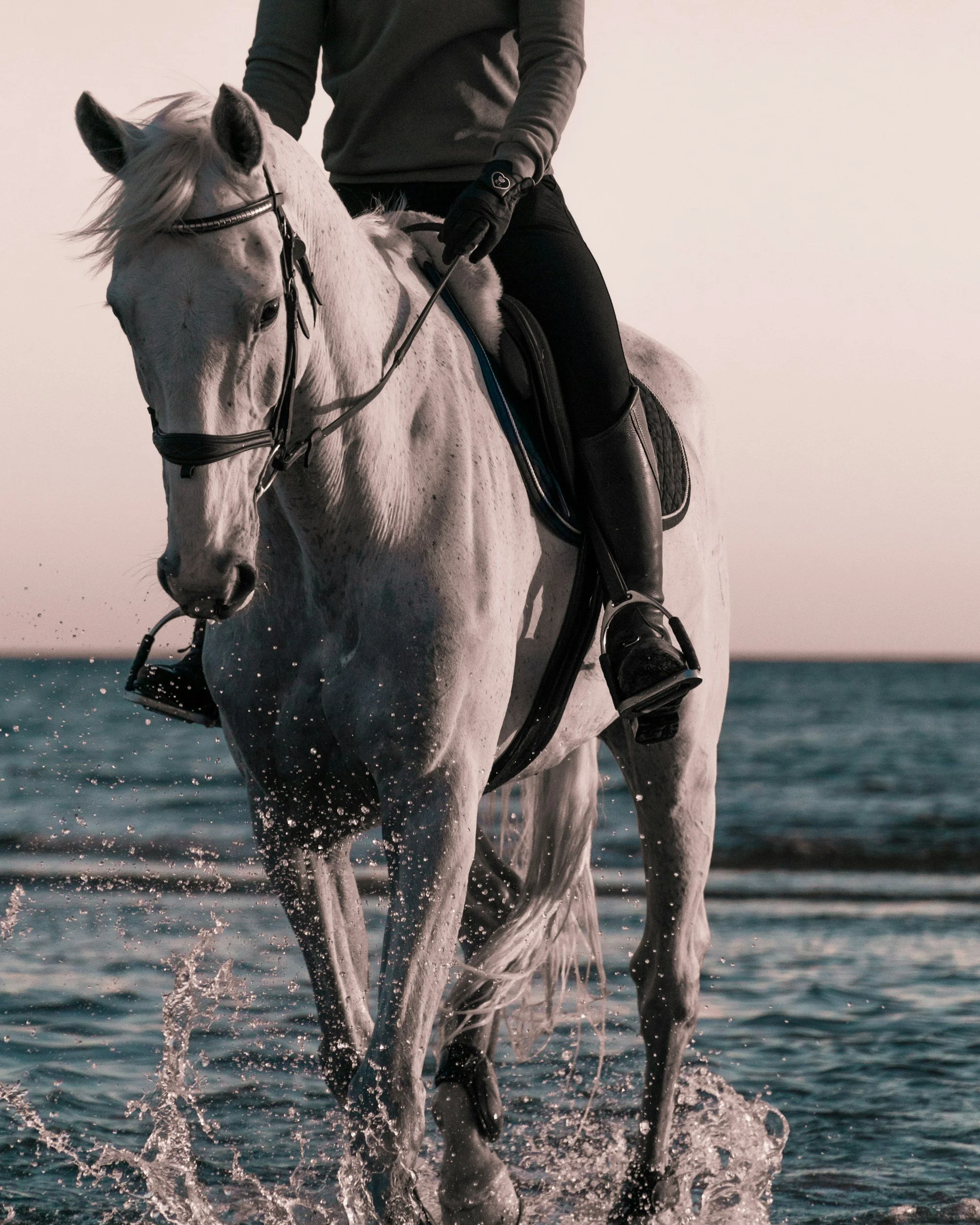
If you've ever felt your heart race as you approach a horse, or found yourself making excuses to avoid riding lessons, you're not alone. Fear of horseback riding is one of the most common barriers that keep people from fully enjoying their equestrian experience. Whether you're a beginner feeling overwhelmed by these powerful animals or an experienced rider dealing with anxiety after a fall, understanding and addressing your fear is the key to unlocking confidence in the saddle. And for what it’s worth, even professionals with decades of experience can struggle with fear.
Understanding the Root of Riding Fear
Fear is fundamentally about feeling out of control. It's a built-in safety feature that humans (and horses) have developed for survival over thousands of years. When we perceive a threat, our nervous system activates the fight-or-flight response, flooding our bodies with stress hormones that prepare us to either face danger or escape from it.
In equestrian settings, this fear response isn't necessarily wrong. Horses are large, powerful animals that can potentially cause injury if handled improperly. However, when fear becomes overwhelming or disproportionate to the actual risk, it can prevent us from progressing in our riding journey and rob us of the joy that comes from partnering with these magnificent creatures.
Recent research has shown that equestrian anxiety can be transferred from rider to horse, creating a cycle where both partners feed off each other's nervous energy. This is why addressing rider fear isn't just about personal comfort—it's about creating a safer, more harmonious partnership between horse and rider.
The Five-Step Path to Overcoming Riding Fear
Step 1: Know What You Can Control
The foundation of conquering riding fear lies in understanding the difference between what you can and cannot control. Many aspects of working with horses are unpredictable—their moods, reactions to environmental stimuli, or sudden movements. However, there are numerous factors within your control that significantly impact safety and success.
You can control your preparation, your adherence to safety protocols, and your response to situations. This is why experienced instructors emphasize seemingly simple rules like never wrapping a lead rope around your hand or maintaining proper positioning relative to the horse's body. These protocols aren't arbitrary; they're time-tested methods for maximizing safety while minimizing risk.
Focus your energy on mastering these controllable elements:
Proper equipment fitting and maintenance
Consistent ground manners and handling techniques
Your own physical fitness and balance
Understanding basic horse behavior and body language
Following established safety procedures
When you build competence in these areas, you create a foundation of knowledge and skill that naturally reduces anxiety. Confidence grows from competence, not from positive thinking alone.
Step 2: Acknowledge Your Fear
One of the biggest obstacles to overcoming riding fear is the shame or embarrassment many riders feel about being afraid. Some trainers, particularly those who haven't experienced significant fear themselves, may dismiss or minimize these concerns. This approach is counterproductive and potentially dangerous.
Acknowledging your fear isn't weakness—it's wisdom. Fear provides valuable information about situations that require extra attention or preparation. When you feel fearful, it's a signal to slow down, assess the situation, and discuss appropriate modifications with your instructor.
Cognitive behavioral therapy (CBT) research shows that identifying and acknowledging anxious thoughts is the first step toward changing them. Instead of fighting or hiding your fear, practice observing it objectively: "I notice that I feel anxious when the horse moves quickly," or "I'm concerned about losing my balance during transitions."
This acknowledgment allows you and your instructor to work together to address specific concerns rather than pushing through anxiety that could lead to unsafe situations or reinforce negative associations with riding.
Step 3: Practice with Purpose
The old saying "practice makes perfect" isn't quite accurate—perfect practice makes perfect. However, when dealing with fear, simply showing up and engaging with horses in a controlled, progressive manner can be incredibly powerful for building confidence.
Psychology offers two primary approaches for addressing fear that can be applied to riding anxiety:
Systematic Desensitization: This approach involves gradually exposing yourself to feared stimuli in a controlled, incremental way. For riding, this might mean starting with ground work, then sitting on a stationary horse, then walking with someone leading, and gradually progressing to independent riding as comfort increases.
Exposure Therapy: This involves direct contact with feared stimuli while preventing avoidance behaviors. In riding contexts, this might mean staying in lessons even when feeling anxious, rather than canceling or avoiding challenging exercises.
Both approaches have merit, and the best choice depends on your individual situation and the severity of your fear. Work with a qualified instructor who understands both horsemanship and the psychology of fear to develop a practice plan that challenges you appropriately without overwhelming your nervous system.
Step 4: Celebrate Progress
Fear creates a negativity bias in our brains, causing us to focus disproportionately on potential problems while overlooking successes. Deliberately celebrating small wins is crucial for rewiring these patterns and building long-term confidence.
Did you successfully mount without assistance? That's worth acknowledging. Were you able to stay relaxed when your horse spooked at a plastic bag? Celebrate it. Could you maintain your seat during an unexpected trot transition? These moments of success are evidence that you're building competence and overcoming fear.
Keep a riding journal where you record not just what happened during each session, but specifically what went well. This practice trains your brain to notice and remember positive experiences, which helps balance the tendency to fixate on problems or potential dangers.
Step 5: Stay Positive with Your Language
Research in sports psychology has revealed a fascinating phenomenon: our brains tend to focus on and move toward whatever we're thinking about, even when framed negatively. When a coach says "don't look down," the rider's brain processes the concept of "looking down" and often does exactly that.
This principle is particularly relevant in riding, where mental focus directly impacts physical performance and safety. Instead of telling yourself "don't be scared" or "don't let the horse run away with me," reframe your internal dialogue using positive language:
Instead of "don't look down," think "eyes up and forward"
Instead of "don't let him spook," think "maintain steady contact and focus"
Instead of "don't fall off," think "deep seat and balanced position"
This isn't about denying reality or pretending problems don't exist. It's about directing your mental energy toward the behaviors and outcomes you want rather than reinforcing what you fear.
Reading Your Horse: A Powerful Fear Management Tool
One of the most effective ways to build confidence around horses is learning to read their body language accurately. Horses are remarkably honest communicators—they don't lie or try to deceive us. When we understand what they're telling us, much of the mystery and unpredictability disappears.
Pay particular attention to ear position, which provides real-time information about your horse's mental state:
Ears forward and head up: The horse is alert and focused on something, potentially preparing to react. If you can easily redirect their attention with a gentle rein aid or voice command, there's no immediate cause for concern. If they remain fixated despite your attempts to redirect, consider making a circle or changing direction to regain their attention.
One ear forward, one ear back toward you: This is an ideal state indicating the horse is aware of their environment but also tuned in to you as their rider or handler.
Both ears back and relaxed: The horse is listening attentively to you and is likely in a calm, focused state.
Ears pinned flat back: This signals displeasure, discomfort, or potential aggression. This horse needs careful handling and may require professional evaluation to address underlying issues and how to address them.
Remember that each horse is an individual with their own communication style and typical behavioral patterns. Work with your instructor to understand your particular horse's normal responses and what changes in their behavior might indicate.
When Fear Persists: Seeking Professional Help
While the strategies outlined above are effective for many riders, some people experience persistent or severe anxiety that interferes with their ability to progress or enjoy riding. Research shows that cognitive behavioral therapy can be particularly effective for addressing equestrian-related anxiety.
If your fear is significantly impacting your riding goals or overall well-being, consider working with a mental health professional who understands sports performance anxiety. Many therapists now specialize in working with athletes and can help you develop personalized strategies for managing fear while pursuing your equestrian goals.
Book: Inside Your Ride by Tonya Johnston
Book: Bolder, Braver, Brighter by Daniel Stewart
Building a Partnership, Not Just Managing Fear
Ultimately, overcoming riding fear isn't just about becoming less afraid—it's about developing a genuine partnership with your horse based on mutual understanding and respect. When you understand horse behavior, develop solid horsemanship skills, and learn to manage your own nervous system, fear naturally diminishes.
The goal isn't to eliminate all concern or awareness of risk. Healthy caution keeps both horse and rider safe. Instead, the goal is to develop what psychologists call "optimal anxiety"—enough awareness to stay alert and engaged, but not so much that it interferes with learning, performance, or enjoyment.
Remember that confidence in the saddle is built through consistent, positive experiences over time. Be patient with yourself, celebrate small victories, and trust that with proper instruction and practice, you can develop the skills and mindset needed to enjoy a fulfilling partnership with horses.
Whether you're just beginning your riding journey or working to rebuild confidence after a setback, remember that fear is a normal part of learning to work with these powerful, intelligent animals. With the right approach, support, and persistence, you can move through fear toward the confidence and joy that make riding such a rewarding pursuit.
Tips for Trainers
If you have a particularly fearful student, often letting them feel like they control the lesson is helpful. I once had a student who refused to do anything I asked out of fear. Once I told her she could jump into the lesson at any point and do whatever she wanted, she ended up taking on more things than I would have even asked her to! Sometimes giving students agency is a great way to help them get past their fears.
Q: Is it normal to be afraid of horses? A: Yes, absolutely. Fear of horses is extremely common and completely normal. Horses are large, powerful animals that can weigh over 1,000 pounds, so having some healthy respect and caution is actually a sign of good judgment. Many experienced riders have dealt with fear at some point in their riding journey.
Q: How long does it take to overcome fear of horseback riding? A: The timeline varies greatly from person to person. Some riders see improvements in just a few weeks with consistent practice, while others may take months or even years to fully work through significant anxiety. The key is consistent, progressive exposure combined with building skills and confidence gradually.
Q: Can I learn to ride if I'm afraid of horses? A: Absolutely! Many successful riders started out afraid of horses. The key is finding an instructor who understands fear and is willing to work at your pace. Starting with ground work and gradually building up to riding can help you develop confidence step by step.
Q: What should I do if my fear gets worse instead of better? A: If your fear is increasing rather than decreasing over time, it's important to slow down and reassess your approach. Consider working with a different instructor, taking a break to focus on ground work, or consulting with a mental health professional who specializes in anxiety or sports psychology.
Q: How do I know if my instructor is right for helping me with my fear? A: A good instructor for fearful riders will acknowledge your concerns, never dismiss or shame you for being afraid, work at your pace, explain what they're doing and why, and prioritize safety above all else. They should also be willing to modify lessons based on your comfort level.
Q: Should I tell my instructor that I'm afraid? A: Yes, definitely. Being honest about your fear allows your instructor to tailor lessons appropriately and ensure your safety. A qualified instructor will appreciate your honesty and work with you to build confidence gradually.
Q: What's the difference between healthy caution and problematic fear? A: Healthy caution keeps you alert and following safety procedures. Problematic fear prevents you from progressing, causes physical symptoms like panic attacks, or makes you avoid horses entirely despite wanting to ride. If fear is significantly impacting your life or goals, it may be time to seek additional support.
Q: Can children overcome fear of horses more easily than adults? A: Children and adults both can overcome fear, but they may require different approaches. Children are often more naturally adaptable but may need more concrete explanations. Adults bring more analytical thinking but may have more complex fears. Both benefit from patient, skilled instruction.
Q: Are some horses better for fearful riders than others? A: Yes, absolutely. Calm, well-trained, predictable horses are ideal for fearful riders. These horses typically have steady temperaments, good ground manners, and don't spook easily. Your instructor should carefully match you with an appropriate horse for your skill and confidence level.
Q: Will my fear affect the horse? A: Horses can sense and sometimes react to human tension and anxiety. However, this doesn't mean you should avoid riding while afraid. Instead, focus on learning relaxation techniques, building skills gradually, and working with calm, experienced horses who are less likely to be reactive to your nervous energy.
Q: What are some good resources or books to learn more about horses and sports psychology? A: Inside Your Ride by Tonya Johnston and Bolder, Braver, Brighter by Daniel Stewart
If you're struggling with persistent riding anxiety, don't hesitate to reach out to qualified professionals who can help. A combination of skilled horsemanship instruction and appropriate mental health support can help you achieve your riding goals while staying safe and enjoying the process. Reach out if you need help finding resources or need advice on your riding experience.
